
Can a Laser Cutter Cut Aluminum? What to Check
A laser cutting system configured for aluminum can cut an aluminum sheet. Switch to tubing of the same alloy, though, and the sheet-cutting result tells you only how the system performs on flat stock. The shape of the workpiece and the required edge finish change what you need to check.
Laser power is one part of the answer
For a specific machine, the question “can a laser cutter cut aluminum” comes down to whether the laser source, cutting head, and back-reflection protection are suitable for aluminum, and which cutting conditions have been validated for that setup. Aluminum is highly reflective, and how the beam is focused at the cut affects the effective power density. Even at the same rated power, two machines may have different stable cutting ranges because of differences in focus, nozzle, and assist gas. Rated power alone gives little indication of cutting speed or edge quality at a given thickness.
Alloy composition, laser absorption, and thermal conductivity affect how aluminum cuts. Surface condition matters too. A protective film, for instance, can affect piercing and edge quality. When you see a cutting thickness listed, check which alloy, surface condition, and edge requirements it applies to. A through-cut tells you the material can be separated. To determine whether that thickness is suitable for production, check whether the cut edge meets the part requirements.
Assist gas can reduce edge oxidation
During cutting, assist gas clears molten material from the kerf. Nitrogen is commonly used to reduce oxidation when the aluminum part has edge oxidation requirements. Oxidation, dross, and burrs are separate aspects of edge quality. Once the gas is selected, factors such as focus and nozzle conditions still affect dross and the kerf.
Aluminum tubing adds clamping and rotation constraints
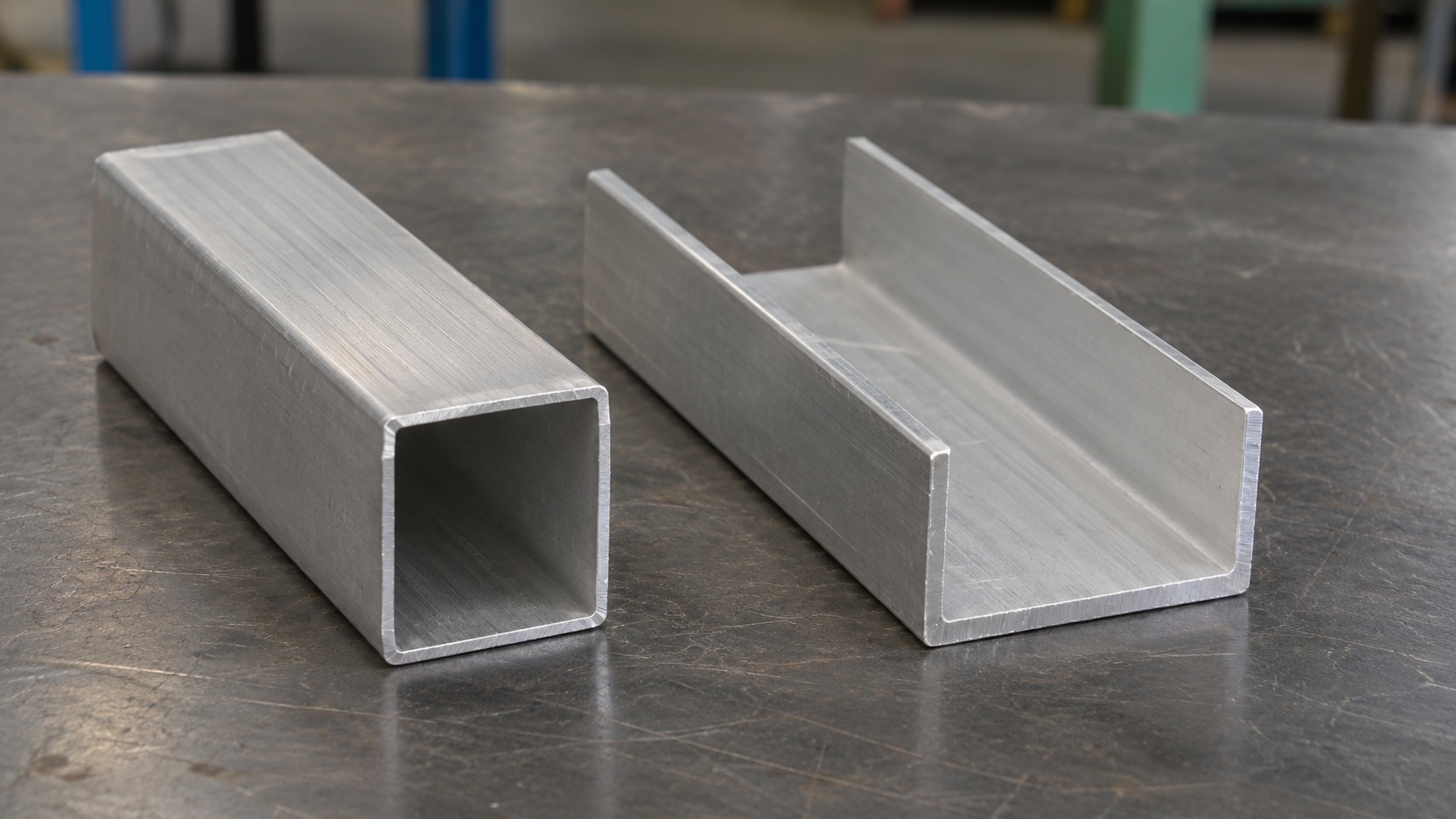
A sheet cutter’s thickness rating applies to flat stock. Using that rating for a tube wall leaves out chuck clamping, rotation, and support. As square and rectangular tubes rotate, their corners sweep a wider envelope than the side dimensions alone suggest. Check the cross-section’s rotational envelope. The rated round-tube diameter does not directly specify the allowable side length of a square tube. Excessive clamping force can leave marks or distort the cross-section of thin-walled or softer tubing. Too little force on thin-walled tubing can allow it to slip or vibrate. For open aluminum profiles, check for distortion and scratches after clamping and make sure the support suits the cross-section.
A bevel at the end of a tube calls for a separate assessment. The beam travels farther through the material, the nozzle-to-workpiece distance and gas flow at the cut change, and the cutting head may encounter interference. Straight-cut settings cannot establish whether a bevel can be cut consistently. For a trial cut, match the actual part’s alloy grade, wall thickness, surface condition, and bevel geometry, then assess the edge against the part requirements. One passing sample shows that the sample met the requirements under those conditions. For production, check whether the result can be repeated.