How Deep Can a Laser Cutter Cut? Metal Thickness Limits
Two specifications can list the same maximum cutting thickness and mean different things. One may say the machine can sever the material, while the other requires the cut edge to meet a quality target. To answer “how deep can a laser cutter cut,” consider the material, the type of cut, and the required edge quality together. There is no single thickness limit that applies to every metal laser cutter and workpiece.
Cutting Through Is the First Threshold
A part can separate from the stock even when the cut face is rough or dross clings to the bottom edge. Maximum cut-through thickness tells you what the machine can sever under the stated conditions. A quality-cut thickness depends on whether the surface roughness, dross, and cut angle meet the part requirements. Recommended production thickness also takes piercing, cycle time, and the share of acceptable parts during continuous operation into account.
Suppose a trial cut on a thick-walled tube goes all the way through and the edge meets the quality requirements. That result applies to the sample and the conditions used for the trial. Several parts are needed to see whether continuous production can hold the same edge quality and cycle time.
The Same Laser Power Can Yield Different Results by Material
Rated power describes the laser’s optical output. The cutting head focuses the beam on the workpiece, where the material melts or reacts locally. Assist gas clears molten material and reaction products from the kerf. The spot size and focus position affect how the energy is concentrated, while the nozzle affects how the gas clears the melt. Carbon steel, stainless steel, and aluminum differ in how they absorb light, conduct heat, and oxidize, so a thickness limit at a given power does not carry over from one material to another. Even with the same material and rated power, differences in beam quality, cutting head, and gas conditions can change the range that can be processed reliably.
When oxygen is used to cut certain carbon steels, the oxidation reaction adds heat and leaves an oxide layer on the edge. Nitrogen is often used when stainless steel or aluminum edges need less oxidation. In that case, the gas stream does most of the work of clearing the melt.
When dross collects at the bottom of a thick-walled tube cut, excessive speed can leave the cut short of full penetration. Going too slowly can cause overburning or even allow the kerf to fuse again. Focus, piercing method, and assist gas also affect the result. Dross alone does not identify laser power as the cause.
Plate Thickness, Tube Wall Thickness, and Bevel Cuts
For plate cutting, the thickness figure refers to the plate itself. In tube cutting, outside diameter describes the tube’s outer size, while the beam has to penetrate the wall at the cut location. A large-diameter, thin-walled tube may be limited by rotational clearance, clamping deformation, or support. A small-diameter, thick-walled tube may be limited by piercing, cutting speed, and heat input. Tube weight also affects chuck load and support, so it needs to be considered separately from wall thickness. A cut through the near wall can also require protection for the opposite wall. Plate thickness figures cannot tell you what the machine can cut under those conditions.
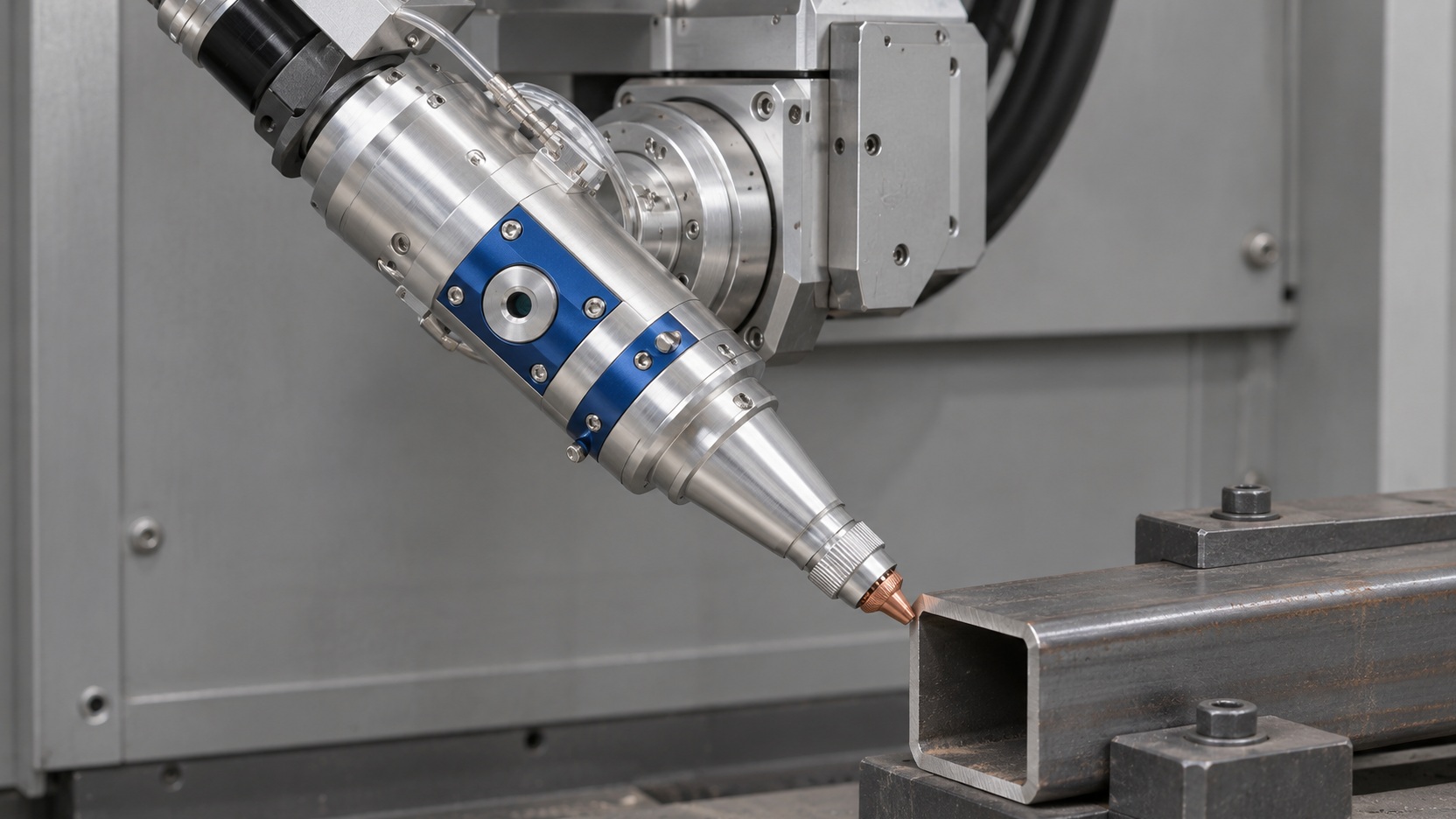
Switch the same tube from a straight cut to a bevel and the measured wall thickness stays the same, but the angled beam usually travels farther through the metal than it would at perpendicular incidence. Tilting the cutting head also changes nozzle clearance, the risk of interference, and focusing conditions. The head’s mechanical tilt range tells you how far it can turn. Whether it can produce an acceptable bevel at a given wall thickness depends on the actual bevel angle, root face, and cut surface quality. If you only have a straight-cut thickness rating and the part needs a bevel, base the judgment on a bevel trial using the same material and wall thickness at the target angle.