
Can Laser Cutter Cut Metal? What Determines the Cut
A suitable laser cutting system can cut carbon steel, stainless steel, aluminum, copper, and brass. The material name alone does not tell you whether a particular part can be cut. Even with the same stainless steel, cutting an outline in flat sheet and cutting a hole in the side of a square tube place different demands on the machine.
Cutting conditions vary by metal
Different laser sources suit different materials and process conditions. In industrial fiber laser cutting, a focused beam delivers energy to a small area, and assist gas clears molten material or reaction products from the kerf. Metals differ in how they absorb and reflect the beam and conduct heat. Alloy composition also affects how they cut. Settings that work for one metal may give different results on another.
Assist gas also affects the cut edge. Oxygen is used for reactive cutting in some carbon steel applications. The reaction adds heat and leaves an oxide layer on the edge. Nitrogen is commonly used to limit oxidation when cutting stainless steel or aluminum. With aluminum and copper, back reflection is another consideration. The usable range depends on the laser source, cutting head, protection against back reflection, and validated process conditions. Even within the same grade, plating, protective film, or rust can affect piercing and edge quality.
Maximum cut-through thickness and production thickness
The power listed for a laser source is its rated optical output. Two machines with the same rating may differ in beam characteristics, focus, nozzle, assist gas, and cutting speed. Those differences can change the thickness each machine can process consistently and the quality of the finished edge. Excessive heat input can distort thin sheet or small features, cause overburning, or widen the kerf.
When you see a thickness limit, check whether it refers to the maximum thickness the laser can cut through or the thickness it can handle consistently at the target cycle time and edge quality. A cut can go all the way through and still leave dross or fall outside roughness or perpendicularity requirements. Where the edge has to meet a specification, a representative sample made from material of the same grade, dimensions, and surface condition gives a better basis for judging the result. One acceptable sample shows what happened under those conditions. Consistent production calls for checking the results across multiple parts.
For metal tubing, check the cross section as well as wall thickness
The usable work area of a sheet laser tells you how large a flat part it can accommodate. In tube cutting, a chuck grips and rotates the workpiece. Tube length and weight affect whether the chuck and supports can handle it. For a round tube, size is expressed as outside diameter. For a square tube, the corners sweep through a wider envelope as it turns. A machine's rated round-tube diameter cannot be used directly as its square-tube side limit. More laser power cannot extend the machine's gripping or rotation range.
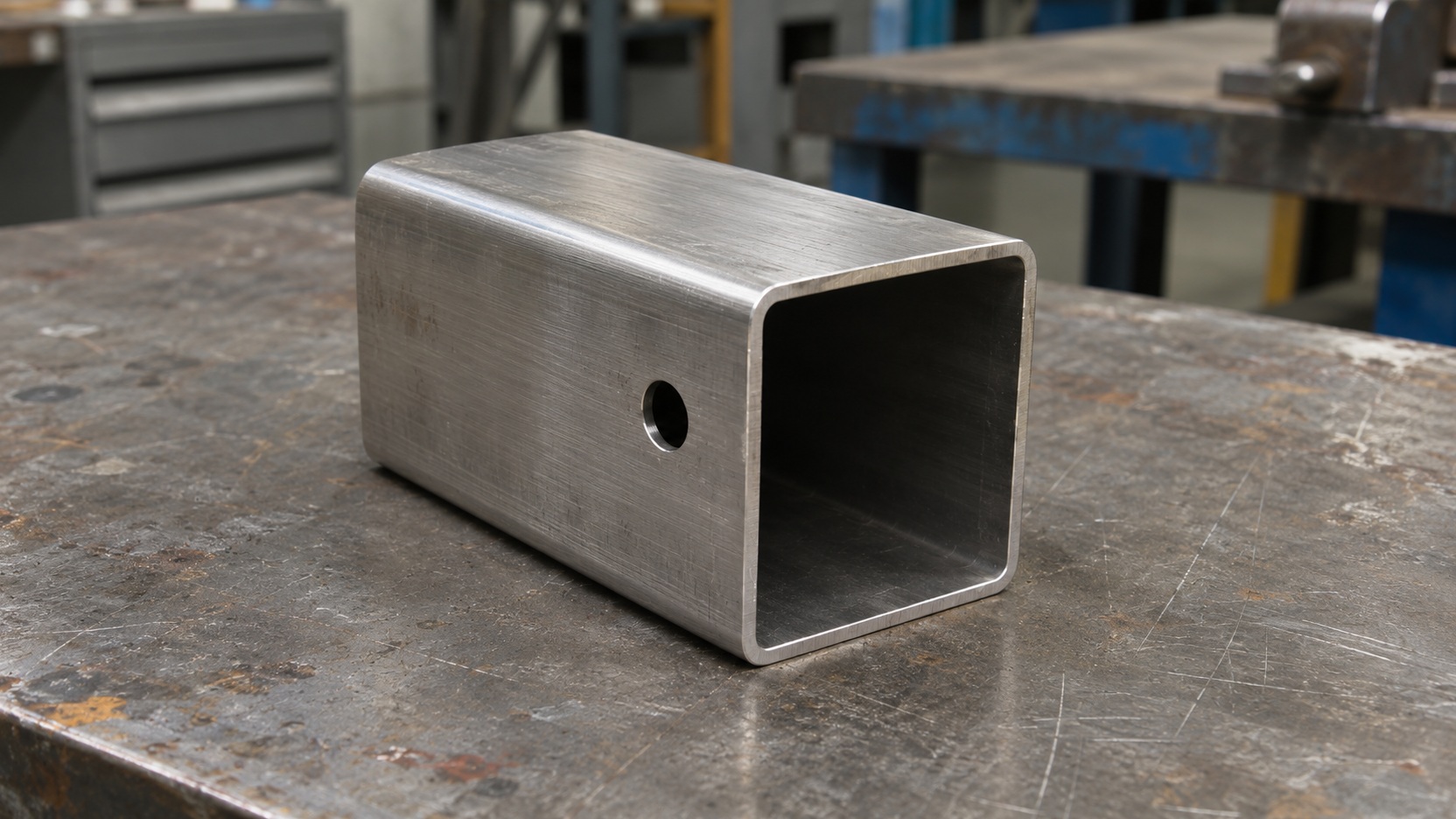
Clamping thin-wall tubing too tightly can distort the section. Clamping it too loosely can allow it to slip or vibrate. Sag in a long tube can also affect hole position and focal distance. A machine configured with a bevel axis can cut bevels within its specified angle range. The angled cut usually travels farther through the wall than a straight cut, so a straight cut at the same wall thickness does not establish bevel capability.