
Can a Laser Cutter Cut Metal? Materials and Limits
Can the same laser cutter process a stainless steel sheet and a stainless steel tube? Both can be cut with suitable equipment. To handle both jobs, one machine must be able to support flat stock and also grip and rotate tubing.
The metal changes the cutting conditions
To answer “can a laser cutter cut metal,” start with the specific metal. Carbon steel, stainless steel, aluminum, copper and brass can all be cut on suitable equipment, but each has its own process conditions. The laser concentrates energy at the cut, where the material melts, burns or vaporizes. Assist gas clears material from the kerf. Metals absorb and reflect laser energy differently, and their thermal conductivity also affects the cut.
Reflection deserves particular attention when cutting copper or brass. Highly reflective materials call for a suitable laser source, adequate power density at the cut and protection against back-reflection. The condition of the surface also affects the process, even when two workpieces have the same base metal.
Assist gas also affects oxidation at the cut edge. Oxygen is used for reactive cutting of some carbon steels. Nitrogen or another suitable inert gas is often used to reduce edge oxidation when cutting stainless steel or aluminum. The gas serves a different purpose in each case, so a change in material calls for a fresh look at the cutting conditions.
Cutting through and producing an acceptable part
In a machine description, “fiber” refers to the laser source, while CNC refers to the control method. Two machines with the same rated power can still have different beam and focus characteristics. The nozzle, gas and motion also affect the result. Power alone cannot tell you how thick or how fast a machine can cut, or what edge quality it can achieve.
When you see a thickness figure, check whether it refers to the maximum thickness the machine can cut through, the recommended production thickness, or the thickness at which a specified cut quality can be achieved. A cut can go all the way through and still fall short of the required edge squareness or surface roughness. Maximum cut-through thickness tells you whether the material can be separated. A quality-cut thickness has to be read against the part requirements. Recommended production thickness is a separate figure, and the cut-through limit cannot be treated as an everyday production rating.
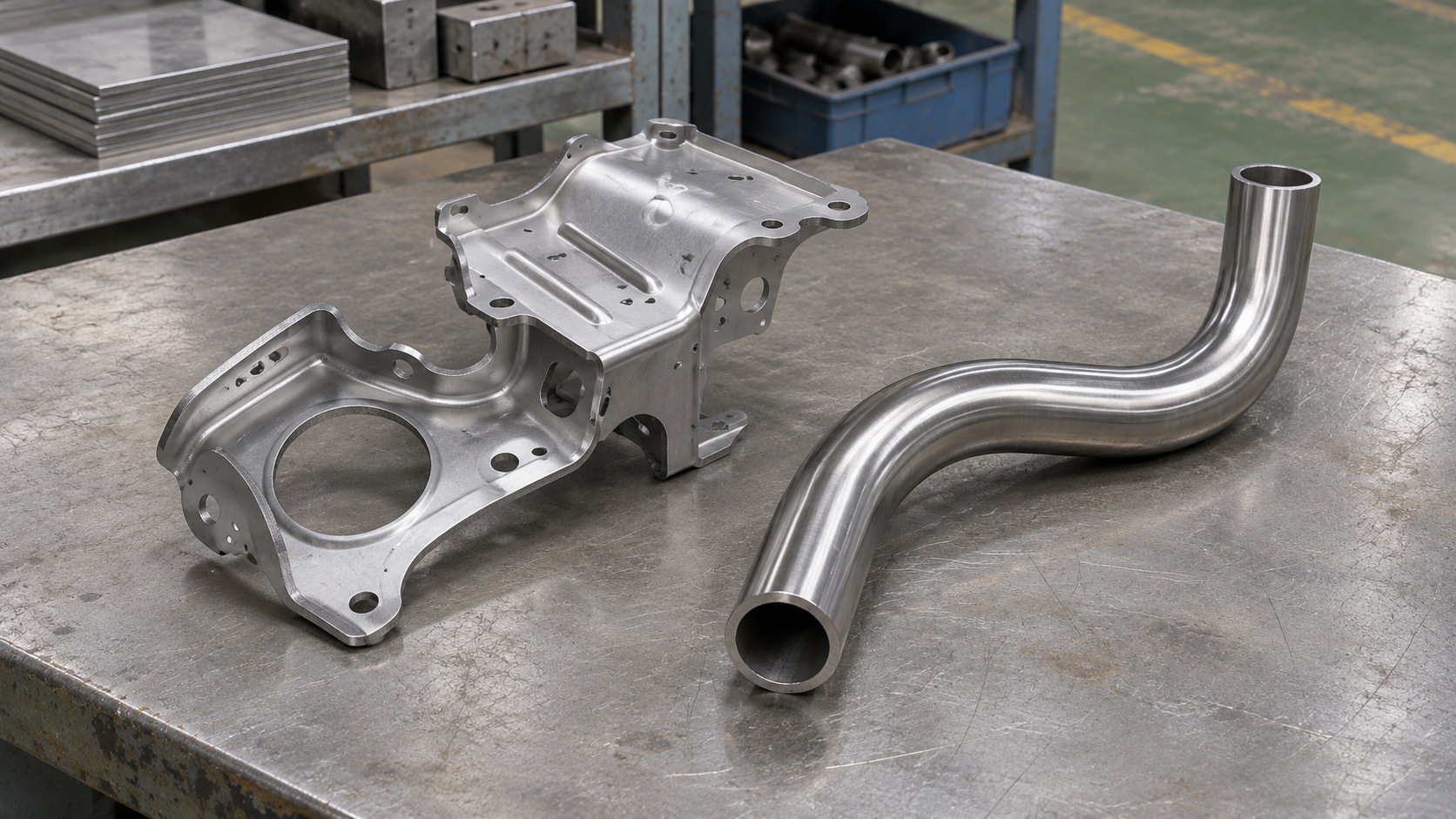
Tube cutting needs its own assessment
For a sheet cutter, consider the working area and load capacity alongside sheet thickness. For tubing, wall thickness tells you only part of the story. Two tubes with the same wall thickness can differ in cross-section, length and weight. Whether they can be processed also depends on the chuck and supports. Tube cutting involves rotation, clamping and support. When cutting a hole in one wall, the opposite wall also matters. Thin-wall tubing can run into trouble before the cut even starts. Excessive chuck force can leave marks or deform the tube.
A trial cut on a representative workpiece can help establish whether a machine can make the part on the drawing. For a tube part, use stock with the corresponding cross-section and wall thickness and judge the cut against the actual edge requirements. One successful cut-through shows that one piece can be separated. To judge whether the machine can consistently produce acceptable parts, look at the results from several pieces cut under the same conditions.