
What Materials Can a Laser Cutter Cut? A Metal Guide
Carbon steel, stainless steel, aluminum, copper, and brass can all be cut with a compatible laser system. Even at the same thickness, a change in alloy or surface condition can affect piercing and cut-edge quality. To answer what materials can a laser cutter cut in industrial metalworking, start with how the metal absorbs laser energy, then consider whether the workpiece is flat sheet, tubing, or a formed part.
Carbon steel and stainless steel have different cut-edge requirements
During cutting, a focused beam concentrates energy in a small area. Assist gas clears molten metal or reaction products from the kerf. Oxygen is used in some carbon steel applications. The oxidation reaction adds heat and leaves an oxide layer on the cut edge. That layer can affect subsequent welding or coating.
Nitrogen and other inert gases are common choices when the goal is to reduce oxidation on a stainless steel cut edge. Gas pressure, flow rate, and nozzle condition also affect the edge. Nitrogen is often used to limit oxidation on aluminum edges as well, with settings that vary by material and thickness.
Aluminum, copper, and brass require a compatible laser setup
The reflectivity of aluminum and copper affects how much laser energy they absorb, and their thermal conductivity changes how heat spreads through the cutting zone. Assess the laser source, cutting head, and back-reflection protection together, and use a validated process window. Brass can also be cut with a compatible system, with cutting conditions affected by its alloy composition.
Even within the same base-metal grade, bare, film-covered, and plated stock can behave differently. Protective film, plating, rust, or oil can affect piercing, fume generation, and cut-edge condition.
The same metal cuts differently as sheet, tube, or a formed part
Flat-sheet contours are generally cut in one plane. A tube cutter must also clamp and support the stock while coordinating tube rotation, axial feed, and cutting-head motion. On welded tubing, seam position and seam height can affect height tracking and cut consistency. Sheet thickness capacity does not translate directly to tube wall thickness capacity. Thin-walled tubing can deform under clamping or suffer localized burn damage. For thicker walls, piercing also matters. A bevel usually gives the beam a longer path through the wall than a straight cut, so straight-cut settings do not transfer directly.
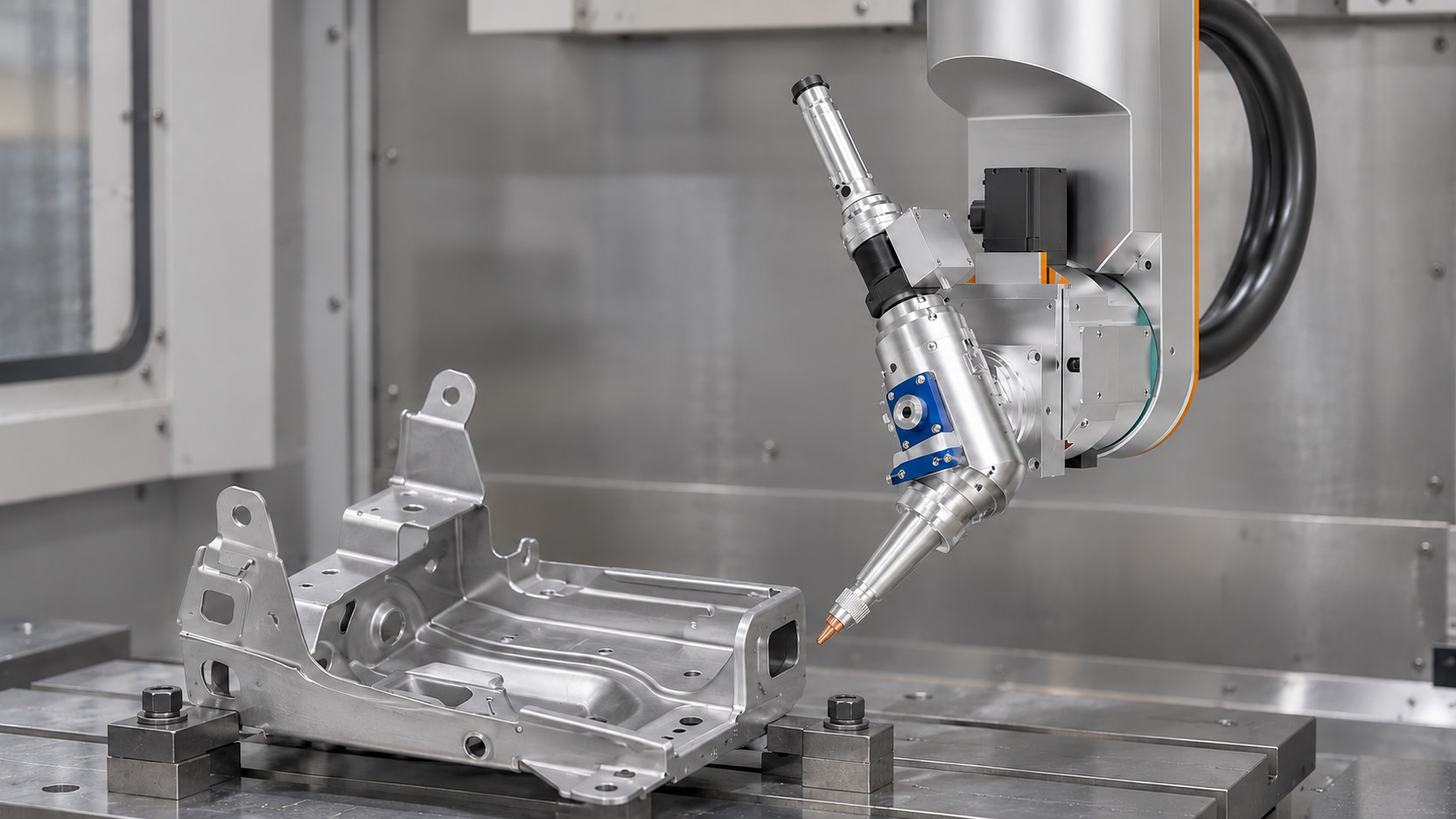
Sidewall holes and trim lines on a formed part can lie on different planes. Coordinated five-axis motion can adjust the beam direction along the contour. Whether the cutting head can approach the cut at the required angle depends on part shape, fixture position, and available clearance.
Cutting through once and meeting quality consistently
Machines with the same rated power can differ in beam quality, focus, nozzle setup, and gas supply, so their stable cutting thickness can differ too. Maximum cut-through thickness, recommended production thickness, and the thickness at which a specified edge quality can be achieved are three distinct measures.
Use representative test pieces that match the actual grade, thickness, and surface condition. Cutting through shows that the material can be separated. A stable process must also reproduce the required cut-edge quality across multiple pieces.